

On November 4, 2026, OpenAI released ChatGPT Images 2.6 and, in the API, GPT Image 2.6 in two versions: gpt-image-2.6-flare and gpt-image-2.6-sunburst. It updates GPT Image 2.5, which came out in September. The headline features are GIFs and saved references in ChatGPT, and for developers, SVG and GIF output, markup-guided edits and a new complexity parameter. OpenAI’s full model lineup is on the GPT Image page.
What launched on November 4
OpenAI summed up the release in one line: images are upgraded, ChatGPT now has GIFs and reference images, and two new API models generate images 50% faster.
- ChatGPT Images 2.6 is on every plan, on the web, desktop and mobile apps, and in Codex.
- In the API,
gpt-image-2.6-flareandgpt-image-2.6-sunburstare available on the generation (/v1/images/generations) and edit (/v1/images/edits) endpoints.
According to OpenAI, people now create more than 4 billion images a week across ChatGPT and the API, up from 3 billion in September. The new features are rolling out gradually: on launch day, users in the OpenAI community reported they hadn’t reached Codex yet.
What’s new in ChatGPT: GIFs and saved references
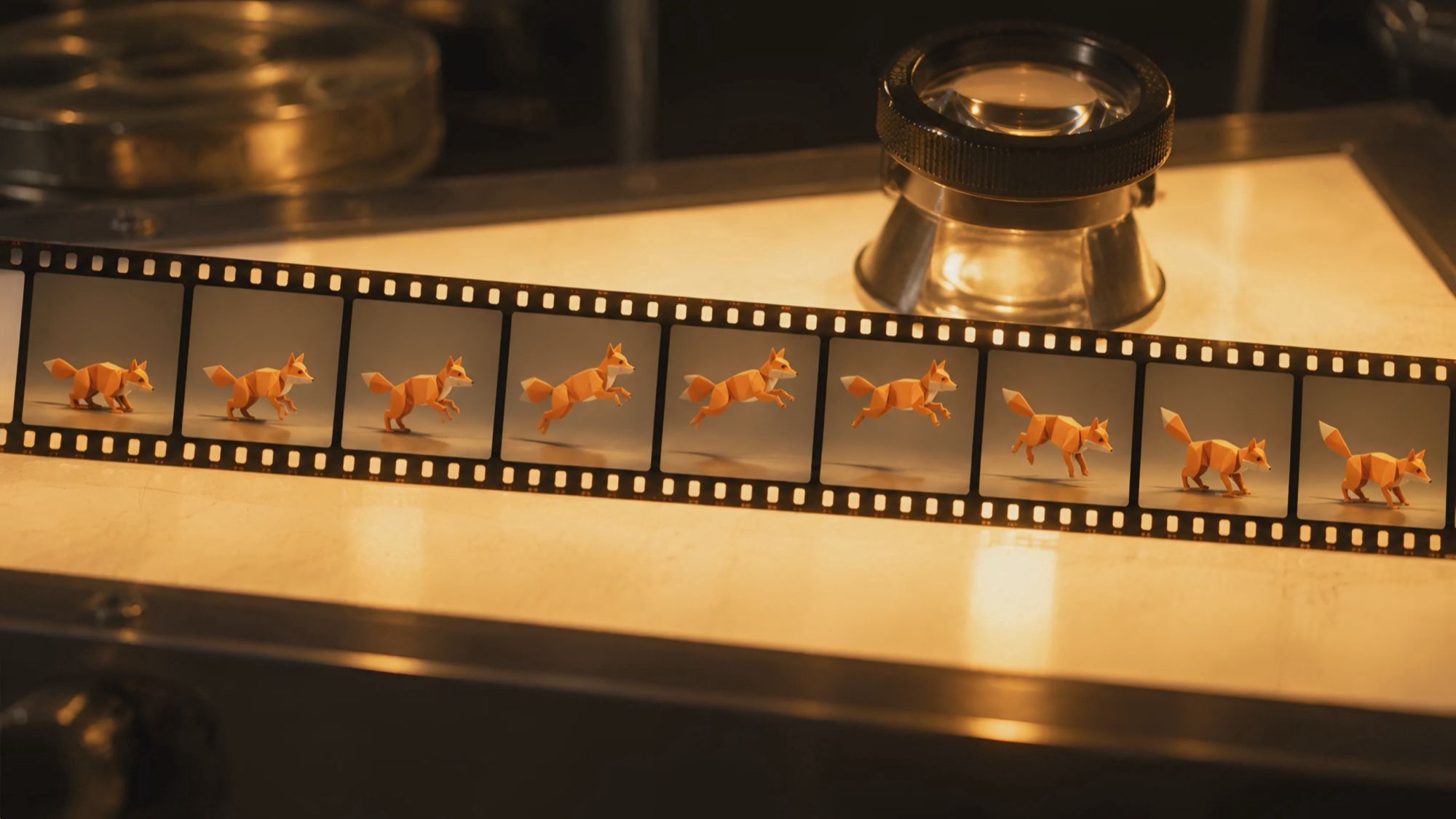
GIFs. ChatGPT turns a prompt or an existing image into an animated GIF. You can change the speed, redraw a single frame and share the loop. GIFs are included on every ChatGPT plan.
Saved references. You can save a photo of yourself, a pet or a character under a name and call it up in new chats with @, without uploading it again. The goal is consistency across a series: the same person, product or brand style in every image.
AI2Face characters work the same way: you save a person once with 2–4 photos and call them in a prompt with an @Name tag. Tags work with every model in the generator, not just GPT Image.
What’s new in the API: complexity, markup, SVG and GIF
| Feature | How to use it | What to know |
|---|---|---|
| Complexity | complexity: low, medium, high |
Defaults to high. Higher values make the model plan the scene more, which helps with dense text and complex layouts but adds latency and sometimes changes things you didn’t ask for. No extra fee |
| Markup-guided edits | markup in /v1/images/edits |
A transparent PNG the same size as the first image, where you draw and annotate what to change. Can’t be combined with mask. Also works with the 2.5 models |
| SVG | output_format: "svg" |
Generation only, one image per request (n: 1). The model draws a raster reference, then vectorizes it. You pay for the reference image plus the SVG tokens |
| GIF | output_format: "gif" |
Generation and edits. frame_count is 2–16 frames, frame_duration_ms is 20–2,000 ms. The default is 9 frames at 200 ms, a 1.8-second loop |
Quality is still set separately with quality: low, medium, high, xhigh or max. complexity controls how much the model plans; quality controls how much detail it renders.
What 2.6 doesn’t have yet: the model docs don’t list the Responses API, Chat Completions or Batch. GPT Image 2.5 does support Batch, where output tokens cost half as much.
Flare vs Sunburst: what’s the difference
- Flare is built for fast iteration. OpenAI says an image can be ready in as little as six seconds.
- Sunburst is built for quality: more detail and more consistent results when you edit the same image several times.
OpenAI doesn’t explain the “50% faster than GPT Image 2.5” figure: it hasn’t said which quality, size or workload it measured. The Flare/Sunburst split dates back to 2.5; see the GPT Image 2.5 page for details.
How much GPT Image 2.6 costs
OpenAI prices images in tokens, and Flare and Sunburst share the same rates. Prices in US dollars per million tokens:
| Tokens | GPT Image 2.6 | GPT Image 2.5 |
|---|---|---|
| Text input | $5 | $5 |
| Cached text input | $1.25 | $1.25 |
| Image input | $8 | $8 |
| Cached image input | $2 | $2 |
| Image output | $30 | $30 |
| Image output, Batch | n/a | $15 |
OpenAI doesn’t publish a per-image price for 2.6, because token counts depend on the model, size and quality. Developers in the OpenAI community noticed that at low and medium quality, 2.6 uses more output tokens than 2.5. So at the same rates, an image can end up costing more. Count tokens on your typical requests before you switch.
In AI2Face, prices are in credits, and you see the cost before you generate.
What the leaderboards and early reviews show
On Arena, where people vote blind, 2.6 ranked below the previous version in its first days. Both 2.6 models are tested there at medium quality with about 3,000 votes each, and the scores are marked preliminary.
| Model | Text-to-image | Single-image edit |
|---|---|---|
| GPT Image 2.5 Sunburst | 1427 (#1) | 1517 (#1) |
| GPT Image 2.6 Sunburst | 1409 (#2) | 1476 (#3) |
| GPT Image 2.5 Flare | 1399 (#3) | 1482 (#2) |
| GPT Image 2.6 Flare | 1384 (#4) | 1462 (#5) |
| Nano Banana 2.1 | 1325 (#7) | 1427 (#8) |
Early reactions on social media are just as muted, and some users say outright that 2.6 is worse than 2.5. For now, 2.6 adds features (GIF, SVG, complexity), but image quality hasn’t improved. Google’s models trail in the same table; see our Nano Banana 2.1 news for more.
Our test: GPT Image 2.6 vs 2.5 on the same prompts
We ran four tasks through AI2Face on three models: GPT Image 2.6 Sunburst, GPT Image 2.6 Flare and GPT Image 2.5 Sunburst. All at 2K, one run per model, no cherry-picking. Each image shows, from left to right: 2.6 Sunburst, 2.6 Flare, 2.5 Sunburst.
Test 1. A poster with text: an art deco poster for a night train with three lines of text, the letter “ø” and em dashes.
All three models got the text right, including “Tromsø” and the dashes in the bottom line. 2.6 Sunburst left a dark smudge above the title. 2.6 Flare drew a diesel locomotive with a cloud of steam above it. A tie on text; 2.5 Sunburst produced the cleanest image.
Test 2. A night photo scene: an elderly woman cooking noodles at a street stall in the rain.
Every model nailed the raindrops, steam and reflections on the asphalt. Both 2.6 versions gave the woman a smile, which makes the shot feel more alive. 2.5 Sunburst went for a more documentary look. None of them added readable signs. A tie.
Test 3. A cutaway infographic: an isometric three-storey bakery with three labels and leader lines.
All three models spelled the labels correctly and placed them on the right floors. Every model drew the flour chute from the top floor to the ovens; 2.6 Flare and 2.5 Sunburst added a hopper in between. 2.6 Flare moved the labels to the left and made them larger. A tie.
Test 4. Editing from a reference: the same man from the portrait at a night market, in a green jacket, holding tea.
All three models kept the face, beard, glasses and sweater. All of them made the curls tighter than in the reference. We couldn’t tell 2.6 from 2.5 by facial likeness. A tie.
| Task | Result | What decided it |
|---|---|---|
| Poster with text | tie | accurate text everywhere; a smudge on 2.6 Sunburst, steam over a diesel on 2.6 Flare |
| Night photo scene | tie | more emotion from 2.6, a more documentary feel from 2.5 |
| Cutaway infographic | tie | correct labels and leader lines from all three |
| Editing from a reference | tie | all three preserved the face |
Four ties back up the Arena picture: right now, 2.6 and 2.5 Sunburst are on par for image quality. The difference between the versions lies in the new API features.
How to try GPT Image 2.6 in AI2Face
GPT Image 2.6 Flare and Sunburst are available in the AI2Face generator alongside GPT Image 2.5, GPT Image 2 and models from other developers. New accounts get starter credits.
- Open the generator and pick GPT Image 2.6 Flare for drafts or Sunburst for the final image.
- Write a prompt. If you need a specific person, add a character with an @Name tag.
- Choose the aspect ratio and resolution; the cost in credits is shown before you generate.
OpenAI writes C2PA metadata into its files to flag them as AI-generated. AI2Face strips it from finished images and writes regular camera EXIF instead, so social networks don’t label your post as AI-generated. Free ways to try OpenAI’s models are covered in GPT Image for free, and the comparison with Google’s Nano Banana models is in Nano Banana vs GPT Image.
Bottom line
GPT Image 2.6 is a feature release, not a quality one. GIFs, saved references, SVG and complexity are useful if you need animated stickers, vector icons or tighter control over edits. On image quality, 2.6 tied with 2.5 Sunburst in our four tests and still trails it on Arena. If you need regular photos, posters and edits, there’s no rush to switch: compare both versions on your own prompts. If you need GIFs or SVG, use 2.6: Flare for drafts, Sunburst for final images.
FAQ
When was GPT Image 2.6 released?
On November 4, 2026. That day OpenAI rolled out ChatGPT Images 2.6 on every ChatGPT plan and in Codex, and released gpt-image-2.6-flare and gpt-image-2.6-sunburst in the API.
How is GPT Image 2.6 different from GPT Image 2.5?
It adds the complexity setting, SVG output and animated GIF output. Markup-guided edits work in both 2.6 and 2.5. Per-token prices are unchanged. OpenAI says generation is 50% faster, but on Arena 2.6 currently ranks below 2.5 Sunburst.
What's the difference between Flare and Sunburst?
Flare is the fast model: in the best case an image is ready in six seconds. Sunburst is slower but produces higher-quality images and keeps details more consistent across edits.
Can GPT Image 2.6 make GIFs?
Yes. In ChatGPT you can make a GIF from a prompt or an image, change its speed and edit individual frames. In the API it's output_format gif with 2 to 16 frames; the default is 9 frames at 200 ms each.
How much does GPT Image 2.6 cost in the API?
Token rates match 2.5: $5 per million text input tokens, $8 per million image input tokens and $30 per million output tokens. OpenAI doesn't publish a per-image price, and 2.6 has no Batch mode yet.
Sources
10
- https://openai.com/index/introducing-images-2-6/
- https://community.openai.com/t/images-upgraded-introducing-chatgpt-images-2-6/1412901
- https://developers.openai.com/api/docs/models/gpt-image-2.6-sunburst
- https://developers.openai.com/api/docs/models/gpt-image-2.6-flare
- https://developers.openai.com/api/docs/guides/image-generation
- https://developers.openai.com/api/docs/pricing
- https://x.com/OpenAI/status/2118124944928432327
- https://x.com/ChatGPT/status/2118168231617700199
- https://arena.ai/leaderboard/text-to-image
- https://arena.ai/leaderboard/image-edit