








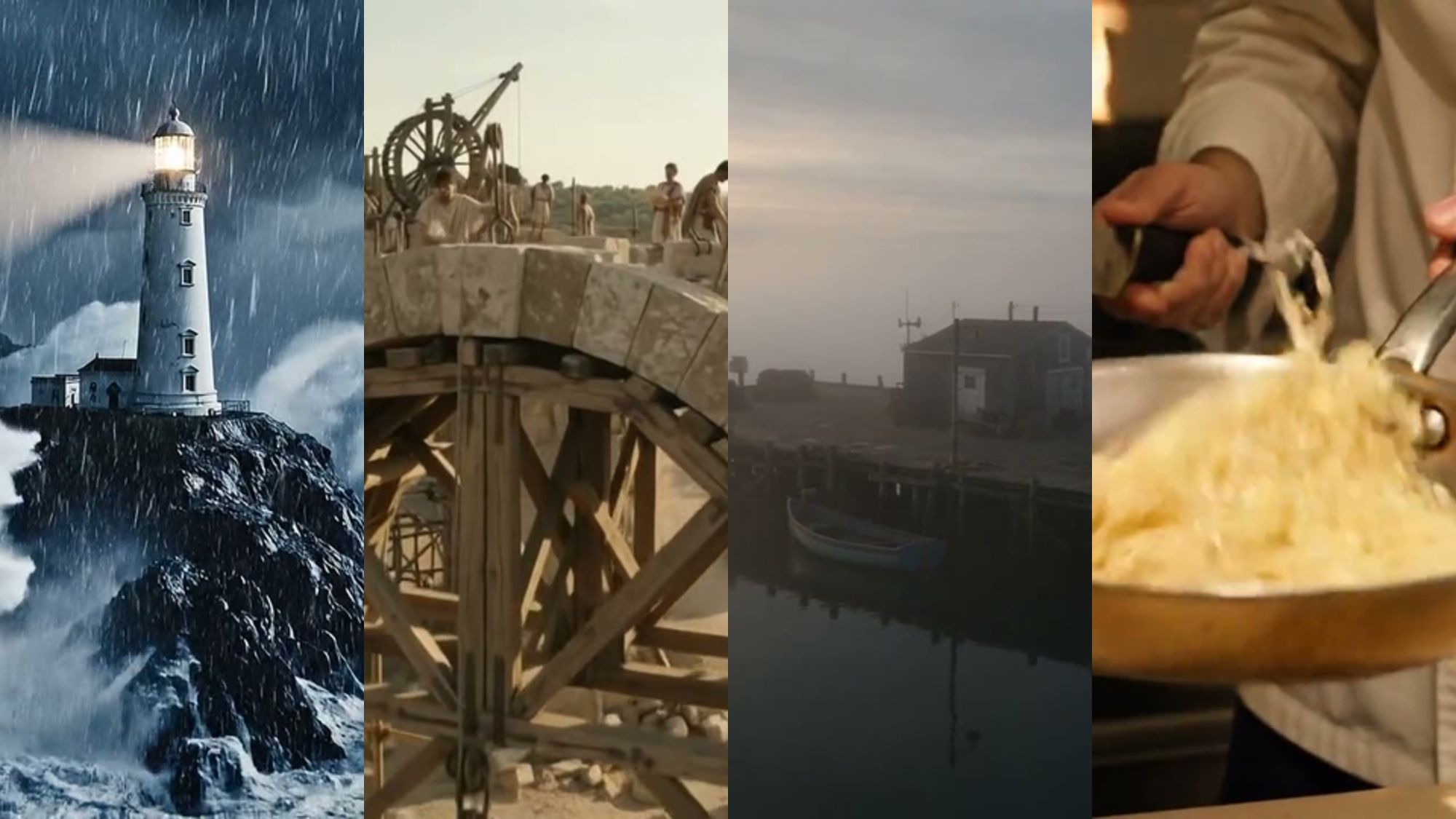
Choosing an AI video generator in 2026 means choosing for the job. Some models give the strongest 8-second shot with sound, others a 30-second story in one pass, others an edit of a finished clip in words. We made a clip in each model in this review and put the differences in one table. The detail and every example sit on the model pages.
Which AI video generator leads now
| Veo 3.1 | Gemini Omni 1.1 Flash | Seedance 2.5 | Kling 3.0 | |
|---|---|---|---|---|
| Developer | Google DeepMind | Google DeepMind | ByteDance Seed | Kuaishou |
| Length per generation | 4, 6, 8 s | 3–10 s | up to 30 s | up to 15 s |
| Max resolution | 4K | 4K (upscale) | not disclosed | 1080p |
| Sound and speech | yes | yes | yes | yes |
| Multiple shots | via timecodes | yes | yes | storyboard |
| Edit a finished video | no | yes, by phrase | yes | yes |
| References | up to 3 images | images and up to 3 videos | 30 photos, 10 videos, 10 audio | up to 7 photos, a character from video |
| First and last frame | yes | yes | yes | yes |
| In AI2Face | yes | yes | yes | yes |
Which model to pick for the job
- Ads, product, an atmospheric shot with sound — Veo 3.1: the best sound and picture in an 8-second clip, and the only one with native 4K.
- Fix a finished clip — change the weather, the clothes, remove an object — Gemini Omni: an edit in an ordinary phrase.
- A scene from several pictures — hero, clothes, location — Gemini Omni or Seedance.
- A 20–30 second story in one clip — Seedance 2.5.
- A 10–15 second storyboard and a dance from a reference — Kling 3.0 with Motion Control.
- Historical and educational scenes — Gemini Omni: it draws on Gemini’s knowledge of the world.
- Fast drafts — Veo 3.1 Lite or Omni at 360p; the final on the higher model.
How to make a video from a photo
Animating a photo is the most common case. The image becomes the first frame, and the prompt describes the camera move, the action and the sound. The more precisely you name what should move, the less the model invents.
- Make or upload a picture — for example, a portrait from Nano Banana 2.
- Pick a video model and the “from a photo” mode.
- Describe the motion: “walks toward the camera, leaves fall, the camera slowly pulls back”.
- Add sound: “rustle of leaves, birds”.
- Start it — a 4–10 second clip is ready in a few minutes.
How to write a video prompt
Google’s formula for Veo works for every model: camera + subject + action + setting + style, with the sound described separately.
- Lines go in quotes:
The baker says: «Только из печи!». - Effects come after the label
SFX:. - Camera moves use operator terms: push-in, tracking shot, drone flyover.
- For several shots, number them — “Shot 1… Shot 2…” — or set timecodes.
- State exclusions by describing the scene, not with a bare “no”: “an empty landscape with no houses” works better than “no buildings”.
Ready prompts, with the clips, are on the pages for Veo 3.1, Gemini Omni, Seedance and Kling.
What happened to Sora
Sora from OpenAI was long treated as one of the leaders, and many roundups still put Sora 2 in the top. That is out of date: OpenAI closed the Sora site and app on April 26, 2026, and switched off the API for sora-2 and sora-2-pro on September 24, 2026. It did not name a replacement in the OpenAI API. For similar jobs, people now use Veo 3.1 or Gemini Omni.
Limits of these video models
- Complex physics and crowds are a weak spot for every model: hands, objects in hands, several people interacting.
- Transitions between two frames often melt in the middle, even when the final frame matches.
- Recognizable people and brands are not generated.
- Length. Even the best models do up to 30 seconds at a time; longer videos are cut together from scenes.
- Speech languages. English is the most reliable.
Conclusions
The best AI video generator in 2026 depends on the job. For a strong short clip with sound, take Veo 3.1; for edits and references, Gemini Omni; for long stories, Seedance 2.5; for storyboards and dances from a reference, Kling 3.0. Sora no longer works. In AI2Face you have Veo 3.1, Gemini Omni, Seedance and Kling, and you can make the first frame there too — in Nano Banana or Seedream.
FAQ
Which AI video generator is the best in 2026?
There is no single leader. For a short clip with sound and in 4K, Veo 3.1; for editing a finished video and for references, Gemini Omni; for long stories up to 30 seconds, Seedance 2.5; for storyboards and motion transfer, Kling 3.0.
Is there a free AI video generator?
No fully free option at this quality: video generation is expensive. Google lets you try Gemini Omni in YouTube Shorts, and other services offer trial credits. In AI2Face, new accounts get welcome credits, enough for the first Veo and Omni clips.
Can a model make a video from a photo?
Yes. All four models in this review can animate a photo: the image becomes the first frame, and the prompt sets the motion and the sound. In AI2Face that is the “from a photo” mode on Veo 3.1, Gemini Omni, Seedance and Kling.
Can you write the prompt in your language?
Models usually follow a prompt in your language. Spoken lines are more reliable in English, because Google fully documents English for Gemini Omni, and other vendors don't publish a speech-language list. A Russian line from our tests can stay as an example inside the prompt: «Только из печи!».
Does Sora still work?
No. OpenAI closed the Sora app and site on April 26, 2026, and the Sora 2 API on September 24, 2026. Roundups that still rank Sora 2 among the leaders are out of date.
Sources
7
- https://ai.google.dev/gemini-api/docs/veo
- https://ai.google.dev/gemini-api/docs/omni
- https://seed.bytedance.com/en/blog/one-take-creation-flexible-referencing-introducing-seedance-2-5
- https://kling.ai/quickstart/klingai-video-3-omni-model-user-guide
- https://help.openai.com/en/articles/20001152-what-to-know-about-the-sora-discontinuation
- https://developers.openai.com/api/docs/deprecations
- https://cloud.google.com/blog/products/ai-machine-learning/ultimate-prompting-guide-for-veo-3-1