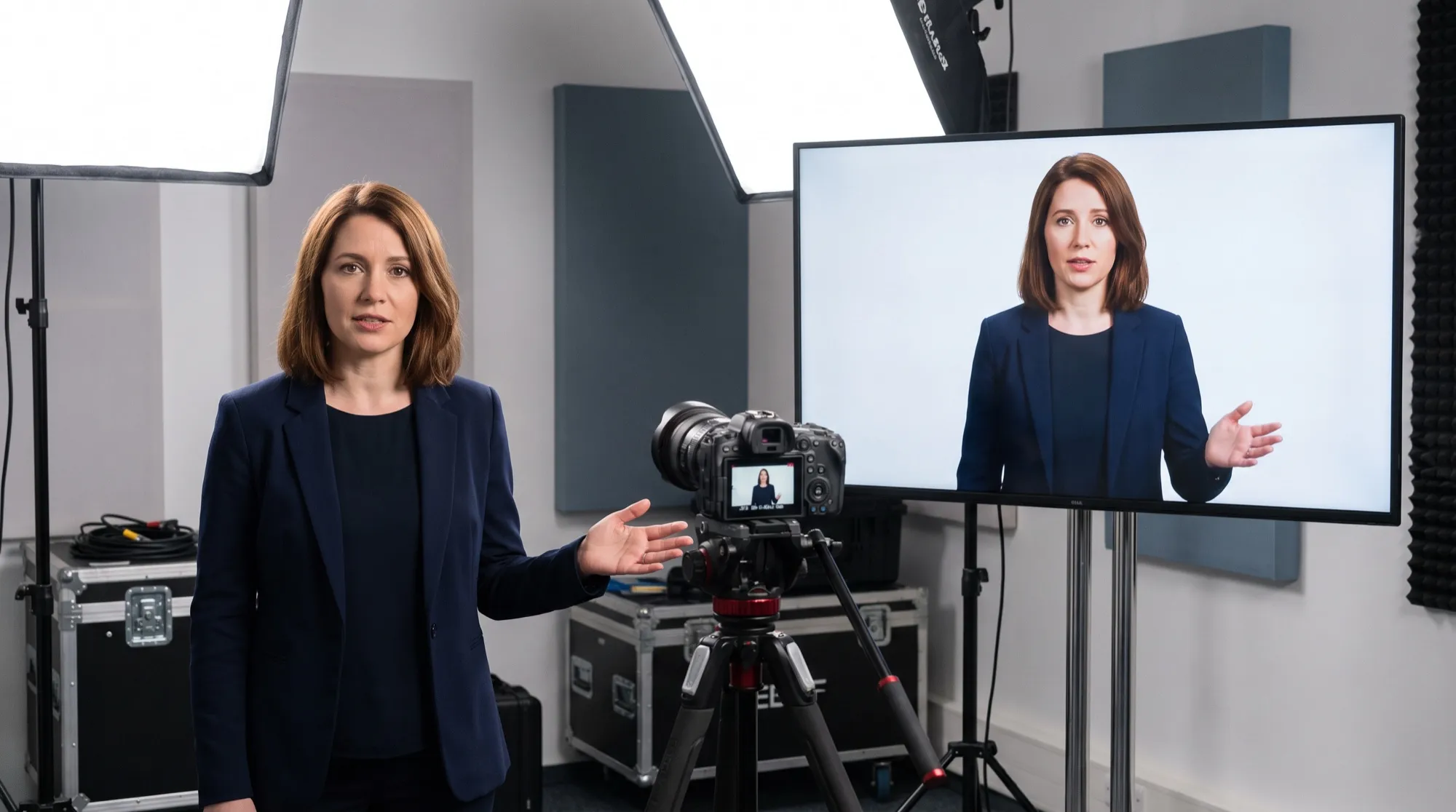










On November 5, 2026, Google DeepMind released Gemini Omni 1.2 Flash, the new version of its Gemini Omni video model. It shipped as generally available (GA) from day one, with no preview. The model generates and edits videos with sound. The main changes: clips run up to 15 seconds instead of 10, video in the API is 30% cheaper per second, and dialogue and lip-sync are noticeably cleaner.
What launched on November 5
Google summed up the release like this: the model is cheaper, the generation and editing limit is now 15 seconds, scenes hold together longer, character speech sounds more natural, and there are fewer jump cuts and visual glitches.
- API and cloud.
gemini-omni-1.2-flashis available in the Gemini API, Google AI Studio and Google Cloud. It only works through the Interactions API; the classic GenerateContent API isn’t supported. - Google products. It’s rolling out to Google Vids, Flow, Google Ads and the Gemini app. Google says the Vids rollout takes one to three days.
What’s new in Gemini Omni 1.2 Flash
15 seconds per generation. You pick the length in one-second steps from 3 to 15 seconds; the default is 10. Omni 1.1 stopped at 10 seconds. Fifteen seconds is enough for a full scene or a TV-length ad without stitching clips together.
Draft first, upscale later. Google recommends drafting at 360p or 720p and upscaling the best take to 1080p or 4K. Upscaling is a separate capability of the model and accepts clips up to 15 seconds long.
Better reference adherence. According to Google, products, characters and brand details stay more consistent from shot to shot. One request can include up to 10 images and up to 3 videos. Audio references are limited to allowlisted users for now.
Speech. Dialogue sounds more natural, lip-sync is tighter, and the model separates multiple speakers better.
Conversational editing. You refine a finished clip with a follow-up message: swap the product, change the lighting or the camera angle. There’s no need to start from scratch.
| Mode | Omni 1.1 Flash | Omni 1.2 Flash |
|---|---|---|
| Text, image and reference-to-video | 3–10 s | 3–15 s |
| First and last frame | 3–10 s | 3–10 s |
| Editing a finished clip | up to 10 s | up to 15 s |
| Extension | +10 s, up to 40 s | +3–10 s, uses the last 10 s of the source |
| Resolution | 360p, 720p; 1080p and 4K via upscaling | 360p, 720p; 1080p and 4K via upscaling |
| Aspect ratio | 16:9, 9:16 | 16:9, 9:16 |
| 720p price in the API | ~$0.10/s | ~$0.07/s |
How much Gemini Omni 1.2 Flash costs
In the Gemini API, video is billed in tokens: $12 per million output video tokens, down from $17.50 for 1.1. One second of 720p equals 5,792 tokens. Google converts that into per-second prices:
| Resolution | Tokens per second | Price per second | 15-second clip |
|---|---|---|---|
| 360p | 1,931 | ~$0.023 | ~$0.35 |
| 720p | 5,792 | ~$0.07 | ~$1.04 |
| 1080p (upscaled) | 8,688 | ~$0.104 | ~$1.56 |
| 4K (upscaled) | 17,376 | ~$0.209 | ~$3.13 |
Input (text, images and video) costs $1.50 per million tokens. The model has no free API tier and no batch mode.
In Google Vids, every Google account gets three free 15-second clips a month. Google AI Pro subscribers get 500 seconds of video, Ultra starts at 2,500 seconds. In the Gemini app, 15-second clips are currently Ultra-only.
AI2Face charges in credits. You see the cost of a video before you generate it; it depends on the length and resolution.
What happens to Gemini Omni 1.1 Flash
Google has marked Omni 1.1 Flash as deprecated. Starting December 3, 2026, all Gemini API requests to it are routed to 1.2 and billed at the new rates. You won’t need to change code, but the model’s behavior will change: if you have prompts tuned for 1.1, test them on 1.2 before December.
What the leaderboards show
On Arena, where people pick the better video in blind comparisons, Omni 1.2 Flash went straight to the top:
| Arena leaderboard | Omni 1.2 Flash rank | Score | Nearest rivals |
|---|---|---|---|
| Text-to-video | #1 | 1541 | Omni 1.1 Flash — 1514 |
| Image-to-video | #1 | 1502 | MiniMax H3 — 1493, Seedance 2.5 — 1488, Wan 3.0 — 1481 |
| Video edit | #3 | 1395 | — |
The scores are still preliminary: the model has fewer than 3,000 votes on each leaderboard. In image-to-video, the confidence intervals of the top five overlap, and Arena gives Omni 1.2 a rank range of 1 to 6. The lead over rivals is small, but the model beats Omni 1.1 on all three leaderboards.
How to try Gemini Omni 1.2 Flash in AI2Face
Gemini Omni 1.2 Flash is available in the AI2Face generator alongside Veo 3.1, Kling, Seedance 2.5 and other video models. You see the cost of every video before you generate it.
- Open the generator, switch to the video tab and pick Gemini Omni 1.2 Flash.
- Choose a mode: text, first frame, references, or editing a finished clip.
- Add a character with an @Name tag: AI2Face passes their photos to the model so the face stays consistent in the video.
- Set the length and resolution. 720p is enough for drafts, and the credit cost shows up before you start.
The video modes are covered step by step in the AI2Face video generation guide. Every Omni video carries an invisible SynthID watermark and C2PA metadata.
Bottom line
Gemini Omni 1.2 Flash is a practical upgrade: 15 seconds per generation, a 30% lower price and the top spots on Arena. If you make ads, product videos or talking characters, use 1.2 instead of 1.1: scenes are longer, speech is cleaner, and a 15-second 720p clip costs about a dollar in the API. If you use Omni through the API, test your prompts before December 3, when 1.1 switches to 1.2 automatically. If you need maximum detail in a short shot, compare the result with Veo 3.1. The full family overview is on the Gemini Omni page.
FAQ
When was Gemini Omni 1.2 Flash released?
On November 5, 2026. It became generally available that day in the Gemini API, Google AI Studio and Google Cloud, with a staged rollout to Google Vids, Flow and the Gemini app.
How long are Gemini Omni 1.2 Flash videos?
Anywhere from 3 to 15 seconds in one-second steps, with 10 seconds as the default. First-and-last-frame videos max out at 10 seconds. Extension adds another 3–10 seconds to a clip.
How much does Gemini Omni 1.2 Flash cost?
About $0.07 per second of 720p in the API, 30% less than Omni 1.1 Flash. 360p is about $0.023 per second, 1080p $0.104 and 4K $0.209. There's no free API tier.
What happens to Gemini Omni 1.1 Flash?
Starting December 3, 2026, every Gemini API request to Omni 1.1 Flash is routed to 1.2 and billed at 1.2 rates. You don't need to change any code, but results may differ from what you're used to.
Can I try Gemini Omni 1.2 Flash for free?
Yes, in Google Vids: every Google account gets three free 15-second clips a month. AI2Face gives new accounts starter credits, and you see the cost of each video before you generate it.
Sources
7
- https://cloud.google.com/blog/products/ai-machine-learning/gemini-omni-1-2-flash-generally-available
- https://docs.cloud.google.com/gemini-enterprise-agent-platform/models/gemini/omni-1-2-flash
- https://aistudio.google.com/docs/pricing
- https://workspaceupdates.googleblog.com/2026/11/gemini-omni-12-flash-now-in-vids-with-15second-generations-and-improved-quality.html
- https://x.com/GoogleAI/status/2118389961426874879
- https://x.com/arena/status/2118420238756921648
- https://arena.ai/leaderboard/video/image-to-video