









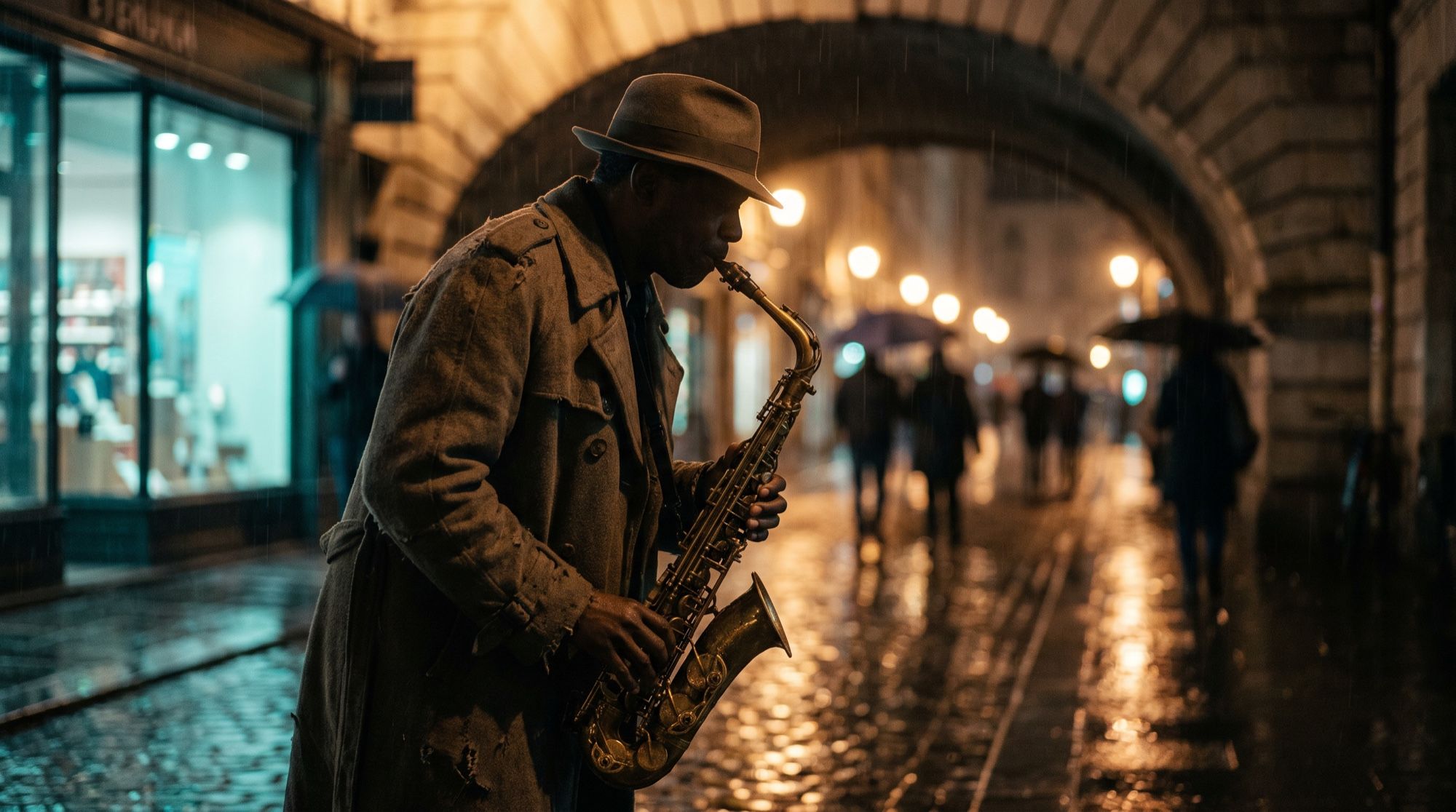
Key facts
| Developer | MiniMax (Shanghai); H3 Max — together with fal.ai |
|---|---|
| Release date | July 31, 2026; weights released August 3, 2026 |
| Duration | 4–15 seconds in 1-second steps; 24 fps |
| Resolution | 768p; 2K by regenerating the same clip |
| Audio | Stereo, generated with the video — speech, effects, music |
| References | Up to 9 photos, 3 videos and 3 audio files, 12 files in total |
| Modes | Text, first and/or last frame, references |
| Open weights | 33B parameters, Hugging Face and ModelScope, MiniMax H3 Community license |
| API price | $0.08 per second at 768p, $0.13 at 2K |
| In AI2Face | Yes, in the generator |
What is MiniMax H3
MiniMax H3 is a video model from the Chinese company MiniMax, the maker of Hailuo AI. It came out on July 31, 2026, and replaced Hailuo 2.3 — which is why it’s often called Hailuo 3 or Hailuo H3. An overview of the whole family and a comparison with the older 2.3 are on the Hailuo page.
MiniMax calls H3 a “general-purpose multimodal model.” Text-to-video, image-to-video, motion transfer and voiceover used to require separate models. In H3 it’s one model: it understands text, images, video and audio, and generates the picture and stereo sound together.
On August 3, 2026, MiniMax released H3’s weights. At its core is a dense transformer with 33 billion parameters. About 13 billion of them can be precomputed and don’t need to be loaded at inference time.
On the Arena leaderboard as of September 21, 2026, H3 ranks 8th of 48 video models — ahead of Veo 3.1 and Sora 2 Pro.
What MiniMax H3 can do
Clips with sound up to 15 seconds. Length is 4 to 15 seconds in 1-second steps, at 24 frames per second. Speech, sound effects and music are generated together with the picture, in stereo.
2K through regeneration. The base resolution is 768p. A separate Regeneration request takes the finished clip and all the original references and generates it again in 2K. MiniMax stresses that this isn’t an upscaler: the model redraws small text, product details and frame structure.
Up to 12 references. In reference mode, H3 accepts:
- up to 9 images;
- up to 3 videos of 2–15 seconds each, no more than 15 seconds in total;
- up to 3 audio clips with the same length limits.
No more than 12 files in total. A reference video sets motion or camera movement; audio sets a voice, a song or a rhythm. Audio only works together with an image or a video.
First and last frame. You can give one image as the start, one as the end, or both — the model builds the motion between them. Without images, the request becomes text-to-video.
Speech in 11 languages. H3 voices a line written in quotes and syncs it with the character’s lips. MiniMax claims stable support for 11 languages, including Russian.
Text and brands in the frame. MiniMax names accurate text and brand rendering as one of H3’s main strengths and targets advertising, e-commerce and animated posters directly.
Aspect ratios: 21:9, 16:9, 4:3, 1:1, 3:4 and 9:16; for image-to-video, the ratio follows the source.
MiniMax H3 versions and pricing
| MiniMax H3 | H3 + Regeneration | MiniMax H3 Max | |
|---|---|---|---|
| Made by | MiniMax | MiniMax | fal.ai, based on H3 |
| Resolution | 768p | 2K | 480p, 768p |
| Length | 4–15 s | same as the source | 5–15 s |
| Modes | text, frames, references, editing | redo of a finished clip | text, image, references |
| API price per second | $0.08 | +$0.05 on top of a 768p clip, or $0.13 straight in 2K | $0.08 at 768p, $0.05 at 480p |
| Free reference images | 5 | — | 2 |
MiniMax’s price list also includes lighter variants: H3 Highspeed at $0.06 per second in 768p and H3 Lite at $0.04 in 768p and $0.025 in 480p. Input video is billed by its duration at the same rate; audio input is free.
What MiniMax H3 is good for
- Ads and e-commerce — a product with lettering, a logo, an animated poster.
- A clip with a character from photos — 9 images are enough to keep the face, outfit and props consistent.
- Motion transfer — a reference video sets the character’s movement or the camera move.
- Music videos — reference audio sets the vocals and rhythm.
- Your own server — the open weights let you run H3 locally; the MiniMax H3 in ComfyUI guide shows how.
MiniMax H3 vs alternatives
| MiniMax H3 | Wan 3.0 | Kling 3.0 | Seedance 2.5 | |
|---|---|---|---|---|
| Developer | MiniMax | Alibaba | Kuaishou | ByteDance Seed |
| Length | 4–15 s | up to 30 s | up to 15 s | 4–30 s |
| Max resolution | 2K | 1080p | 4K | 1080p |
| References | 9 photos, 3 videos, 3 audio | 10 photos, 5 videos, 5 audio, a document | up to 7 images or elements | up to 50 files |
| Open weights | yes | no | no | no |
| Arena rank (Sep 21, 2026) | 8 | 6 | — | 7 |
| In AI2Face | yes | yes | yes | yes |
H3 is the only model in Arena’s top 10 with open weights, and it has the most flexible set of inputs: photos, video and audio in one generation. If you need a clip longer than 15 seconds, use Wan 3.0 or Seedance 2.5; for 4K, use Kling 3.0.
How to write prompts for MiniMax H3
- Describe how the inputs relate to the result in plain words. MiniMax recommends exactly this: “the woman from the first photo sings to the audio, the camera moves like in the video.”
- Add camera tags. H3 understands tags like
[pan],[zoom]and[static]— they set the movement without long descriptions. - Put lines in quotes and say who’s speaking.
- Describe sound in a separate sentence: “Sound: rain on cobblestones, a saxophone, a distant tram.”
- Don’t skimp on detail. A prompt can be up to 7,000 characters.
An example for the reference board above:
The woman from images 1–3 in a yellow raincoat rides the green bicycle from image 5
along the wet cobblestone street from image 7, holding the red umbrella from image 4.
She stops at the café from image 8, pulls down her hood and smiles at the camera:
"Finally home." [pan] the camera follows her from the side, then [static] on a close-up.
Sound: rain, tires swishing, a soft accordion from the café.
How to use MiniMax H3 in AI2Face
MiniMax H3 is in the AI2Face generator next to Wan 3.0, Kling and Veo 3.1.
- Sign up — new accounts get starter credits.
- Open the generator, switch to video and pick MiniMax H3.
- Upload frames or references, write a prompt, choose the length and resolution.
- The credit cost is shown before you start. Credits don’t expire.
You can prepare references in the same generator — a character sheet like the one on this page takes one prompt in Nano Banana Pro.
Limitations
- 15 seconds per generation. Anything longer has to be stitched.
- 2K is a separate step. First 768p, then regeneration.
- H3 Max has no 2K and no clips shorter than 5 seconds.
- Reference audio doesn’t work on its own — only together with an image or a video.
- File limits: video up to 50 MB, images up to 30 MB, audio up to 15 MB; image sides from 256 to 5,760 px, aspect ratio from 2:5 to 5:2.
- The open weights are heavy. MiniMax’s example setup uses 4 GPUs, and the 2K stage is only available via the API.
- Fine detail. MiniMax itself says visual detail can still be improved in some scenes.
Bottom line
MiniMax H3 is the best pick when a clip is built from many sources: a character’s photos, a motion video and a voice track in one generation, plus genuine 2K and stereo sound. It’s the only model in Arena’s top 10 with open weights, so you can run it yourself. For clips longer than 15 seconds, use Wan 3.0 or Seedance 2.5; for storyboards with recurring characters, Kling 3.0. You can compare all of them on the same prompt in AI2Face.
FAQ
What is MiniMax H3?
A video model from the Chinese company MiniMax and the successor to Hailuo 2.3 — it's also called Hailuo 3. One model understands text, photos, video and audio and makes clips up to 15 seconds in 2K with stereo sound.
How is MiniMax H3 different from H3 Max?
H3 Max is a version post-trained by fal.ai: it's faster and follows prompts more closely, but only outputs 480p and 768p and clips of 5 seconds or longer. The main H3 offers 2K and video editing.
How do you get 2K in MiniMax H3?
First you generate a 768p clip, then a separate Regeneration request regenerates it in 2K using the original references. It isn't an upscaler: the model redraws small text and details from scratch.
How much does MiniMax H3 cost?
In the MiniMax API it's $0.08 per second at 768p and $0.13 at 2K; regenerating a finished 768p clip in 2K costs $0.05 per second. Five reference images per task are free, and audio input isn't billed.
Can I download MiniMax H3?
Yes. The weights are on Hugging Face and ModelScope under the MiniMax H3 Community license, but the model has 33 billion parameters, and MiniMax's example setup uses 4 GPUs. The 2K stage hasn't been open-sourced.
Is MiniMax H3 available in AI2Face?
Yes. MiniMax H3 is in the AI2Face generator, and the cost is shown before you start.
Sources
6
- https://www.minimax.io/blog/minimax-h3
- https://www.minimax.io/news/minimax-h3-open-source
- https://platform.minimax.io/docs/guides/video-generation
- https://platform.minimax.io/docs/guides/pricing-paygo
- https://platform.minimax.io/docs/release-notes/models
- https://arena.ai/leaderboard/text-to-video