








Character voiceover is used for stories, podcasts, games, training scenes and audiobooks. It used to mean stitching together lines from different voice actors by hand. Google’s speech models voice a two-person conversation in a single request, and a character is described in words: “in the gravelly voice of an old pirate.” Below are four samples made in the AI2Face generator, and how to repeat each one.
How the AI character voice generator works
AI2Face has two tools for characters:
| Tool | What it does | Where to find it |
|---|---|---|
| Dialog mode | two characters speak in different voices in one file | Audio tab → Voice mode → Dialog |
| Reading style | turns a voice into a character: age, personality, emotion, pace | the How to read field, Gemini 3.8 models |
All five voice models support Dialog mode, and Gemini 3.8 Flash TTS and Gemini 3.8 Flash-Lite TTS understand a reading style. Google sets one limit: no more than two speakers per request. The voices come from a shared set of 30. More on them in our roundup of AI voices for voiceover.
How to voice a two-voice dialog: 5 steps
- Open Audio → Dialog. In the AI2Face generator, that’s the Audio menu in the header or the Voice mode switch in the Audio tab.
- Set up the speakers. In the Speakers block, enter two names and pick a voice for each. The names must be different.
- Write the lines. Each line goes on a new row as “Name: text.” The Line button next to a name adds a row with that name. A row without a name continues the previous line.
- Describe the scene in How to read. The style applies to the whole conversation: “a lively chat between two podcast hosts,” “like a gentle bedtime story for children.”
- Press Generate. The recording appears in your feed as one file. The character names aren’t spoken: we checked every sample below with speech recognition.
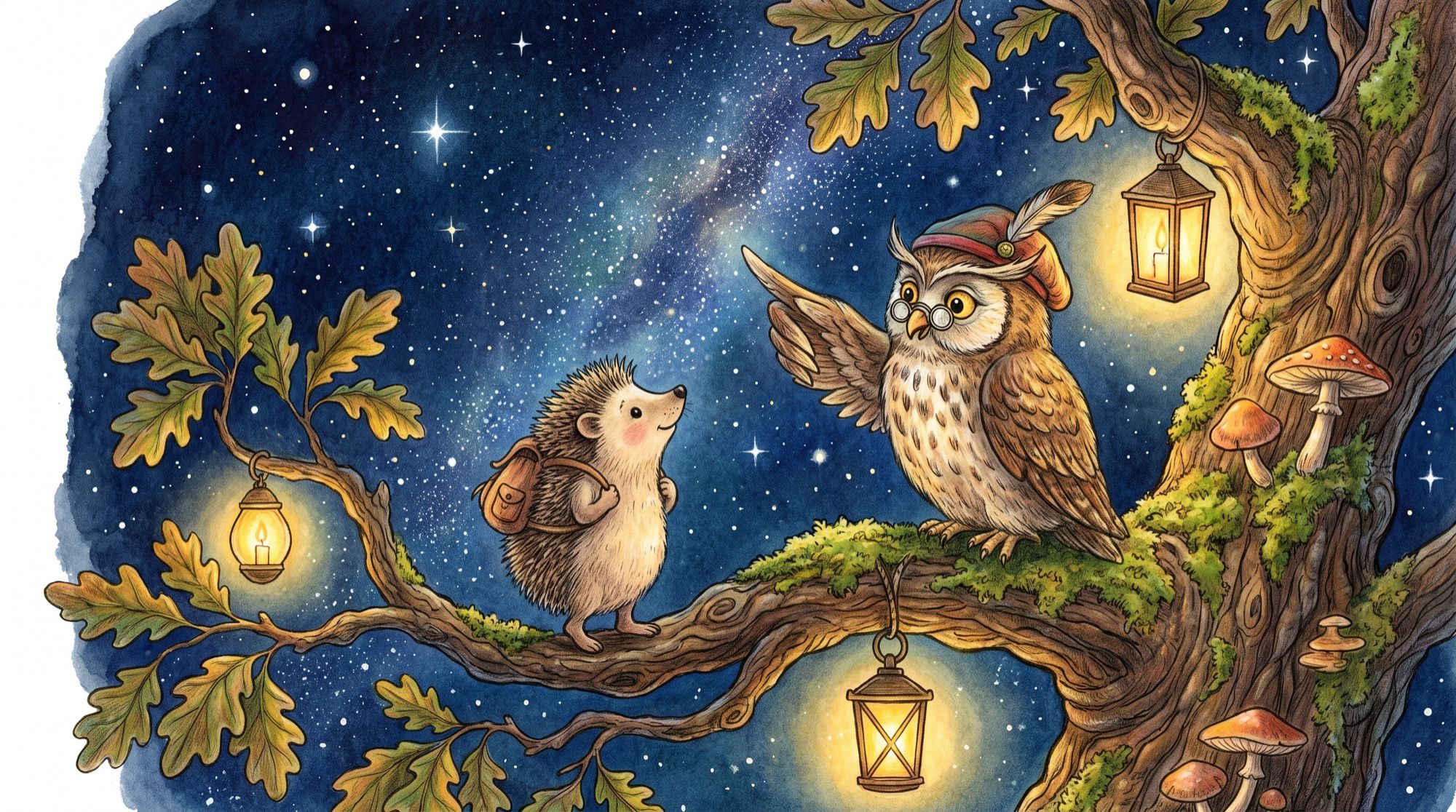
Sample 1: a bedtime story with a Hedgehog and an Owl
The Hedgehog is Puck (“upbeat”), the Owl is Gacrux (“mature”). Style: “like a gentle bedtime story for children, expressive and unhurried.”
Hedgehog: Owl, why don't the stars fall down?
Owl: Because they're very far away, little one. Farther than the tallest oak.
Hedgehog: If I climb the tallest oak, can I reach them?
Owl: No. But from up there they look closer. Come on, I'll show you.
For a children’s story, pick two contrasting voices: a high, upbeat one and a low, mature one. Kids can then tell the characters apart by ear, without a picture.
Sample 2: a two-host podcast
Anna is Kore (“firm”), Max is Charon (“informative”). Style: “a lively chat between two podcast hosts, with light irony.”
Anna: Max, is it true that espresso wakes you up more than filter coffee?
Max: Not really. A big cup of filter coffee usually has more caffeine. It's just a bigger serving.
Anna: So my morning espresso is self-deception?
Max: More of a ritual. And rituals work too.
Google says Gemini 3.8 Flash TTS stages “two-speaker scenes with natural turn-taking from a single script”: in the sample above, both parts are recorded in one file with no manual editing. Keep lines short: in a podcast, a line longer than two sentences sounds read rather than spoken.
How to make a character voice with a reading style
One voice becomes different characters without changing timbre once you describe the delivery. The style formula: who is speaking + emotion + pace.
| Character | Voice | How to read |
|---|---|---|
| Old pirate | Algenib | in the gravelly voice of an old pirate, eager |
| Thriller narrator | Enceladus | mysterious and slow, with pauses |
| Storyteller | Achernar, Sulafat | like a bedtime story: softly, unhurried |
| Cartoon villain | Fenrir | silky and sly, with a smirk |
| Robot assistant | Schedar | flat, emotionless, slightly mechanical |
| Sports commentator | Puck | fast and rising, like the last minute of a match |
| Wise mentor | Gacrux, Rasalgethi | calm and weighty, pausing before the key point |
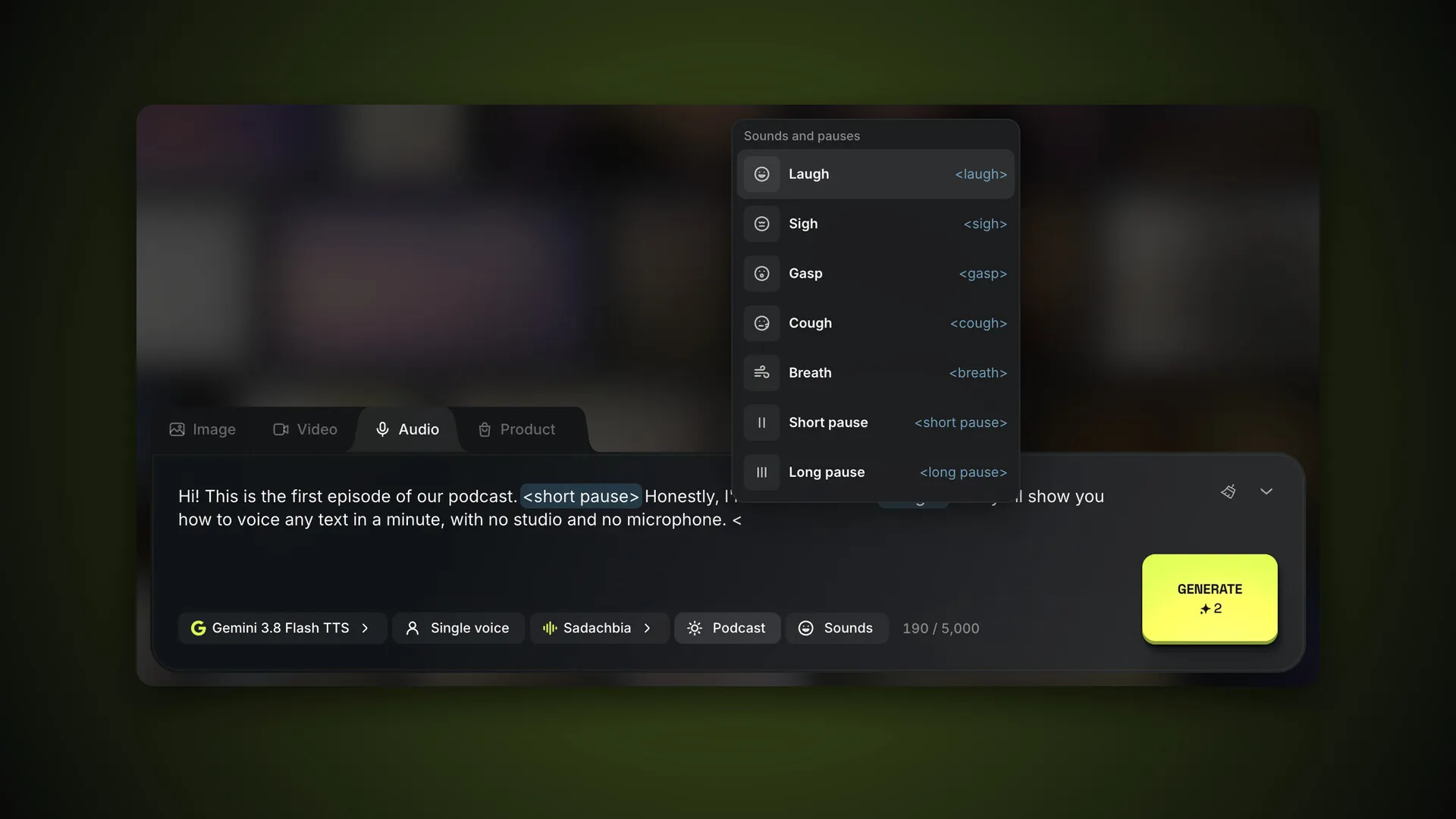
For short emotions inside the text, use tags: <laugh> for a laugh, <sigh> for a sigh, <gasp> for a surprised breath, <short pause> for a pause. Gemini 3.8 models don’t read them aloud, they turn them into sounds. More on tags in the Gemini TTS guide. In AI2Face, typing “<” inserts a tag and typing “@” inserts a speaker’s name in a dialog — see how it works in the text to speech guide for AI2Face.
When there are more than two characters
Google sets the two-voice limit per request, so scenes with three or more characters are built in parts:
- Split the scene into fragments where two people talk, each one in Dialog mode.
- Voice the third character’s lines in Single voice mode with the same style.
- Assign voices to characters for the whole book or series, and write down who speaks in which voice.
- Join the files in an audio editor in scene order.
An audiobook with character voices works the same way: dialog in pairs, narration in the narrator’s voice.
Where character voiceover is useful
- Fairy tales and kids’ stories — two characters and a narrator.
- Podcasts — a pilot episode before you record real hosts, or a regular segment.
- Training scenes — a seller and a customer, a doctor and a patient, a teacher and a student.
- Games and prototypes — placeholder character voices before you hire actors.
- Videos with a recurring hero — a voice for a character you drew in AI2Face. How to keep their look consistent from shot to shot is covered in characters in AI2Face.
Where to voice characters with AI
Dialog mode and reading styles are available in the AI2Face generator, next to image and video generation. You can draw a character, animate it and give it a voice in one service. The cost of each voiceover is shown before you generate.
Bottom line
For a conversation between two characters, use Dialog mode and a pair of clearly contrasting voices: high and low, upbeat and mature. The reading style makes the character, not the choice of voice: Algenib as a pirate and Algenib with no style are two different people. With three or more characters, you’ll build the scene from parts and keep each character on one voice. Celebrity and famous cartoon voices are off-limits; if you need exactly that voice, hire a voice actor.
FAQ
How do I voice a dialog with two voices?
In the Audio tab, choose Dialog mode, give the two speakers names and voices, and write each line on a new row as “Name: text.” The model voices the conversation as one file, and the names aren't spoken.
How many characters can I voice in one file?
Two. Google limits dialog to two speakers per request. For three or more characters, voice the scene in parts, as pairs or single lines, and join the files.
Can I use a celebrity or cartoon character's voice?
No. Real people's voices and well-known characters are protected, and AI2Face doesn't imitate them. You can build your own character from the 30 voices and a description of the delivery.
How do I make a voice sound like a character?
Pick a voice with the right timbre and describe the delivery in How to read: age, personality, emotion, pace. For example, Algenib with “in the gravelly voice of an old pirate” sounds like a pirate.
Can I voice an audiobook with different characters?
Yes, in parts: dialog between two characters in Dialog mode, narration in a single narrator voice. Keep each character on the same voice across all chapters.
Sources
3
- https://aistudio.google.com/docs/speech-generation
- https://blog.google/innovation-and-ai/models-and-research/gemini-models/gemini-3-8-text-to-speech/
- https://docs.cloud.google.com/text-to-speech/docs/gemini-tts